XIAMEN, FUJIAN, CHINA, July 1, 2026 /EINPresswire.com/ — Logistics teams within pharmaceutical distribution centers frequently come up against physical walls—quite literally. As aisle widths narrow to enable higher-density storage and inventory racks rise ever taller, traditional material handling equipment quickly reaches its functional limits. Pharmaceutical environments add further complexity: stable temperature control, contamination-free operation, and gentle handling of sensitive packaging are non-negotiable.
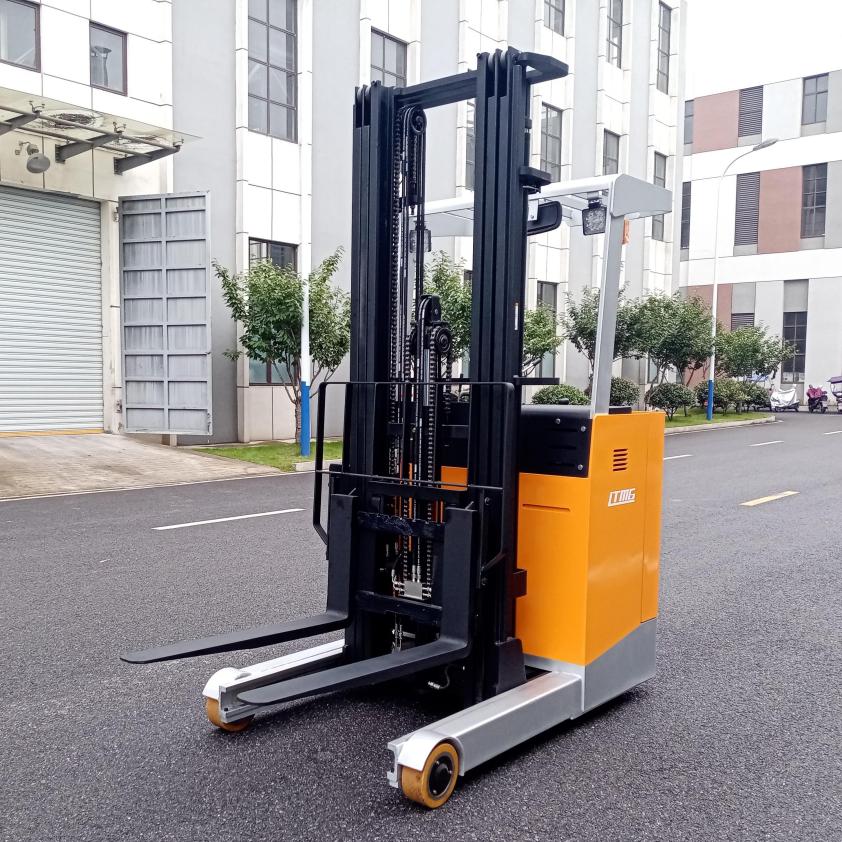
To meet these demands, facilities increasingly turn to Customized Forklift Solutions for Specialized Industrial Tasks—for example, electric narrow-aisle reach trucks fitted with low-vibration masts, anti-static tires, and sealed lithium-ion power systems that maintain stable output without releasing emissions or generating sparks. This shift represents a fundamental move away from generic utility toward operational precision tailored to the task at hand.
Decision Points: Balancing Standard and Tailored Solutions
Many foundational logistics operations rely heavily on standard “off-the-shelf” forklifts as the cornerstone of their warehouse operation. These units are specifically tailored for universal purposes: flat surface transit, standard pallet dimensions and routine tonnage applications. Their primary advantage lies in being “plug and play,” with low initial acquisition costs and rapid delivery cycles making these forklifts ideal for facilities with fixed workflows where having one general-purpose tool would suffice.
As industrial tasks become more complex, standard models’ limitations become clear. High-intensity sectors often encounter “non-standard” triggers – such as limited space footprints, load shapes or environmental hazards – where standard forklifts cannot safely or efficiently perform. When this happens, customized forklift solutions for Specialized Industrial Tasks become necessary – whether its an extra tall mast configuration that exceeds standard mast configurations, or special attachments to handle delicate non-palletized goods. Customization unlocks productivity by eliminating operational bottlenecks, ensuring that equipment becomes a force multiplier perfectly aligned with the task at hand.
Scenario Comparison: When Standard Solutions Fall Short
A specialist approach becomes especially valuable in situations where conventional forklifts cannot perform effectively. Three categories illustrate this clearly: spatial constraints, environmental extremes, and functional complexity.
Spatial constraints in high-density warehousing. Standard counterbalance forklifts require wide aisles to maneuver. Customized forklift solutions such as articulated electric VNA trucks or three-way pallet stackers can operate in aisles as narrow as 1.6 meters. These units incorporate purpose-built masts and trilateral head assemblies with forks that rotate 180°, allowing operators to pick and place loads on either side without turning the vehicle—often increasing storage capacity by as much as 50%.
Environmental extremes. In cold-chain facilities –such as pharmaceutical storage warehouses and frozen food distribution centers — where temperatures fall to –30 °C, standard hydraulic fluids thicken and conventional lead-acid batteries lose significant capacity. A capable customized forklift solutions provider can deliver high-voltage lithium-battery forklifts with integrated thermal management—motor-and-battery dual water cooling/heating circuits maintain stable performance in both freezing and high-heat conditions. In chemical processing or grain handling, where combustible dust or vapors create ignition risks, explosion-proof modifications and IP67-rated electrical systems and motors keep operations safe.
Functional complexity. Standard forks are designed for pallets, but industrial tasks often involve paper rolls, steel coils, or oversized timber. ODM attachments—360° rotators, side-shifting paper-roll clamps, telescopic forks, and more—turn a single vehicle into a multifunctional handling platform, eliminating manual transfers and reducing the risk of product damage.
How these customizations differ from standard configurations, supporting at-a-glance comparison for procurement teams:
LTMG Manufacturing Capabilities
Meeting the demanding customization requirements calls for a manufacturer with both the engineering depth and the production infrastructure to deliver at scale without compromising precision. LTMG Machinery Group Co. Ltd. (LTMG) has built exactly this capability.
Established in 2001, LTMG Machinery Group Co. Ltd. (LTMG) has grown into an international enterprise in the construction machinery market, with a global layout that now spans more than 180 countries and regions. Built around three core business segments—software technology, supply chain services, and intelligent manufacturing—and supported by manufacturing bases in Xiamen and Shandong, the Group has earned wide recognition from clients at home and abroad, positioning itself among the benchmark Chinese construction machinery brands going global.
This brand strength is grounded in tangible manufacturing capacity. Unlike traditional trading entities, LTMG operates as a direct manufacturer with eight dedicated production lines and approximately 120,000 square meters of production area. The combination of automated welding, laser cutting, robotic assembly, and ZEISS-grade measuring systems ensures that every unit—whether a standard-line forklift or a one-off engineered configuration—meets the same exacting quality benchmarks before leaving the factory.
This same infrastructure is what gives LTMG’s product portfolio the depth and flexibility today’s industrial buyers expect. Across electric forklifts, internal combustion forklifts, warehouse equipment, rough terrain machines, and heavy-duty material handling units, every configuration is produced on the same disciplined platform—providing customers with consistent quality across the full customized forklift solutions range, regardless of tonnage, power type, or application scenario.
Strategic Selection for Industrial Matching
Any transition to specialized equipment should be guided by clear, need-based logic rather than novelty alone. For routine, low-complexity tasks—such as unloading a trailer on an ordinary dock—a high-quality standard forklift remains the most cost-effective choice; LTMG supports these needs with a robust product matrix spanning 1-ton electric models to heavy-duty 45-ton diesel units.
For industrial tasks that materially affect a client’s bottom line—reducing product waste in a paper mill, optimizing vertical space in an urban distribution center, or maintaining temperature-stable operation in a pharmaceutical warehouse—customization is often the key to long-term cost reduction. Time-to-deployment is equally important: while standard equipment can usually ship from local stock, custom configurations require additional engineering and assembly time. LTMG addresses this through a responsive manufacturing mechanism that typically targets a 30-day delivery cycle for customized equipment, allowing enterprises to obtain Customized Forklift Solutions for Specialized Industrial Tasks without prolonged operational gaps.
By selecting a partner that offers both reliable standard fleets and flexible customized forklift solutions, industrial clients gain an ally capable of evolving with their operational complexity. LTMG has earned international recognition through this combination of core manufacturing strength and tailored engineering, and it remains committed to becoming one of the flagship Chinese construction machinery brands on the global stage—addressing each industrial task on its own terms.
For more information about industrial equipment and bespoke handling solutions, please visit: https://ltmg.com/.
LTMG Machinery Group Co. Ltd.
LTMG Machinery Group Co. Ltd.
+86 173 5001 5962
email us here
Visit us on social media:
LinkedIn
Instagram
Facebook
YouTube
TikTok
Legal Disclaimer:
EIN Presswire provides this news content “as is” without warranty of any kind. We do not accept any responsibility or liability
for the accuracy, content, images, videos, licenses, completeness, legality, or reliability of the information contained in this
article. If you have any complaints or copyright issues related to this article, kindly contact the author above.

Media gallery