A new Entogo analysis finds make-ready, transformers and demand charges — not the charger — drive DC fast-charging cost, citing NEVI, NREL and RMI data.
TORONTO, ON, CANADA, June 1, 2026 /EINPresswire.com/ — Ask what a DC fast-charging station costs and the public answer spans $50,000 to more than $1 million per site — a range too wide to plan against. A new analysis published by Canada-based power-equipment manufacturer Entogo breaks the project into its actual cost lines and reaches a conclusion that reorders how operators budget: the charger itself is rarely the largest expense. Drawing on the Atlas Public Policy and Paren study of 330 winning National Electric Vehicle Infrastructure (NEVI) site awards — which put the average project at $915,420 and the median at $802,267 — together with National Renewable Energy Laboratory (NREL) deployment data and Rocky Mountain Institute rate-design work, the analysis locates the real cost where operators least expect it.
The dominant lines sit on the electrical side of the meter. NREL’s deployment data shows electrical infrastructure — the make-ready conduit and conductor, panels and switchgear, plus the transformer and any utility service upgrade — running 30 to 60 percent of total project cost, frequently more than the charger hardware. The effect compounds with power: a 150 kW charger draws on the order of a 175 kVA load and a 350 kW unit more than 400 kVA, neither of which a typical commercial site is pre-fed for. Above roughly 150 kW per port, the analysis notes, the utility-side cost line grows faster than the hardware line.
The sharpest finding concerns the bill that arrives after the station is built. Rocky Mountain Institute has documented cases where demand charges — billed on the single highest rate of power draw in a period, not on total energy used — drive more than 90 percent of a public charger’s electricity bill at low utilization. A 350 kW charger pulled briefly for one session can set the metered peak for the entire month. Two levers move that number: tariff reform such as windowed or block demand charges, and an on-site battery system sized to clip the peak so the utility never sees the spike.
The full breakdown of what it costs to install a DC fast-charger station, and a companion analysis on cutting demand charges with battery storage, set out the cost stack line by line. Among the levers with the largest effect: building a site EV-ready during initial construction cuts make-ready cost 40 to 60 percent per connector versus a later retrofit, per NREL; and fleet depots — which routinely cross $1 million as the service becomes a custom substation — increasingly design an on-site battery layer from day one, governed by codes including UL 9540, UL 1973 and NFPA 855.
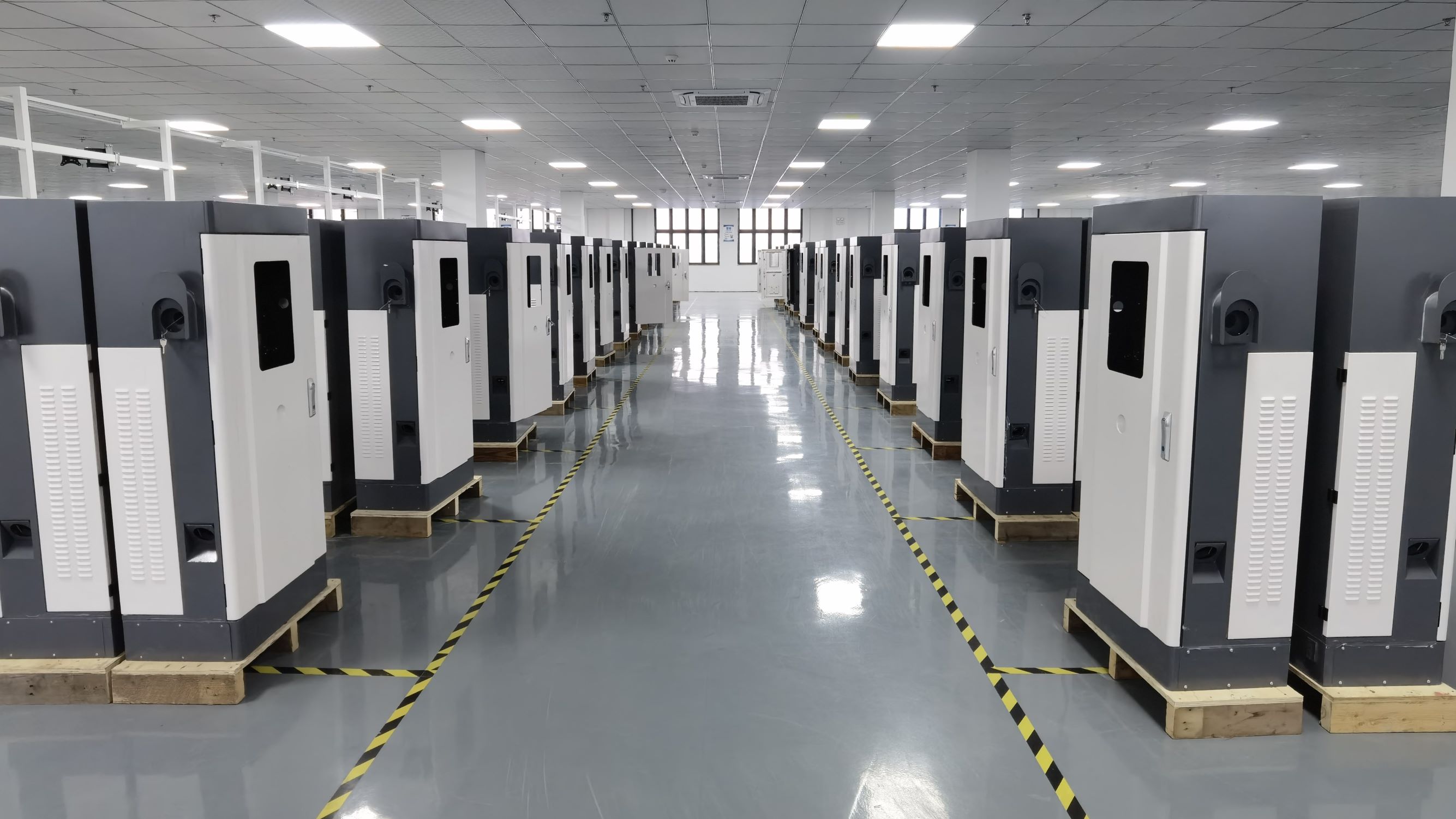
The analysis closes on sourcing. Because a station’s cost is spread across chargers, transformers, switchgear and storage, sourcing them from one manufacturer on one schedule removes both engineering and lead-time risk. Entogo manufactures all four — AC and DC chargers from 60 to 600 kW, pad-mount and prefabricated substation transformers, medium- and low-voltage switchgear, and battery energy storage — and ships European-standard catalogue equipment in an average of 12 weeks, within 36 weeks even when a product requires new UL or other North American certification. For a public operator, the company notes, that can be the difference between meeting a NEVI compliance window and missing it. Its full EV charging infrastructure equipment line is documented on the company’s site.
Entogo Inc. is a Canada-based clean-energy and electrical-power equipment manufacturer headquartered in Toronto, Ontario. Established in 2022 and backed by a founding and technical team with more than 15 years of industry experience, the company manufactures transformers, prefabricated substations, switchgear, power-distribution equipment, battery energy storage, EV chargers and integrated photovoltaic-storage-charging systems, serving public charging networks, fleet operators, utilities, renewable developers and EPC contractors across North America and global markets. Its analyses are published at entogo.ca/insights.
Yang Zheng
Entogo Inc.
email us here
Visit us on social media:
LinkedIn
Instagram
Facebook
TikTok
X
Legal Disclaimer:
EIN Presswire provides this news content “as is” without warranty of any kind. We do not accept any responsibility or liability
for the accuracy, content, images, videos, licenses, completeness, legality, or reliability of the information contained in this
article. If you have any complaints or copyright issues related to this article, kindly contact the author above.

Media gallery