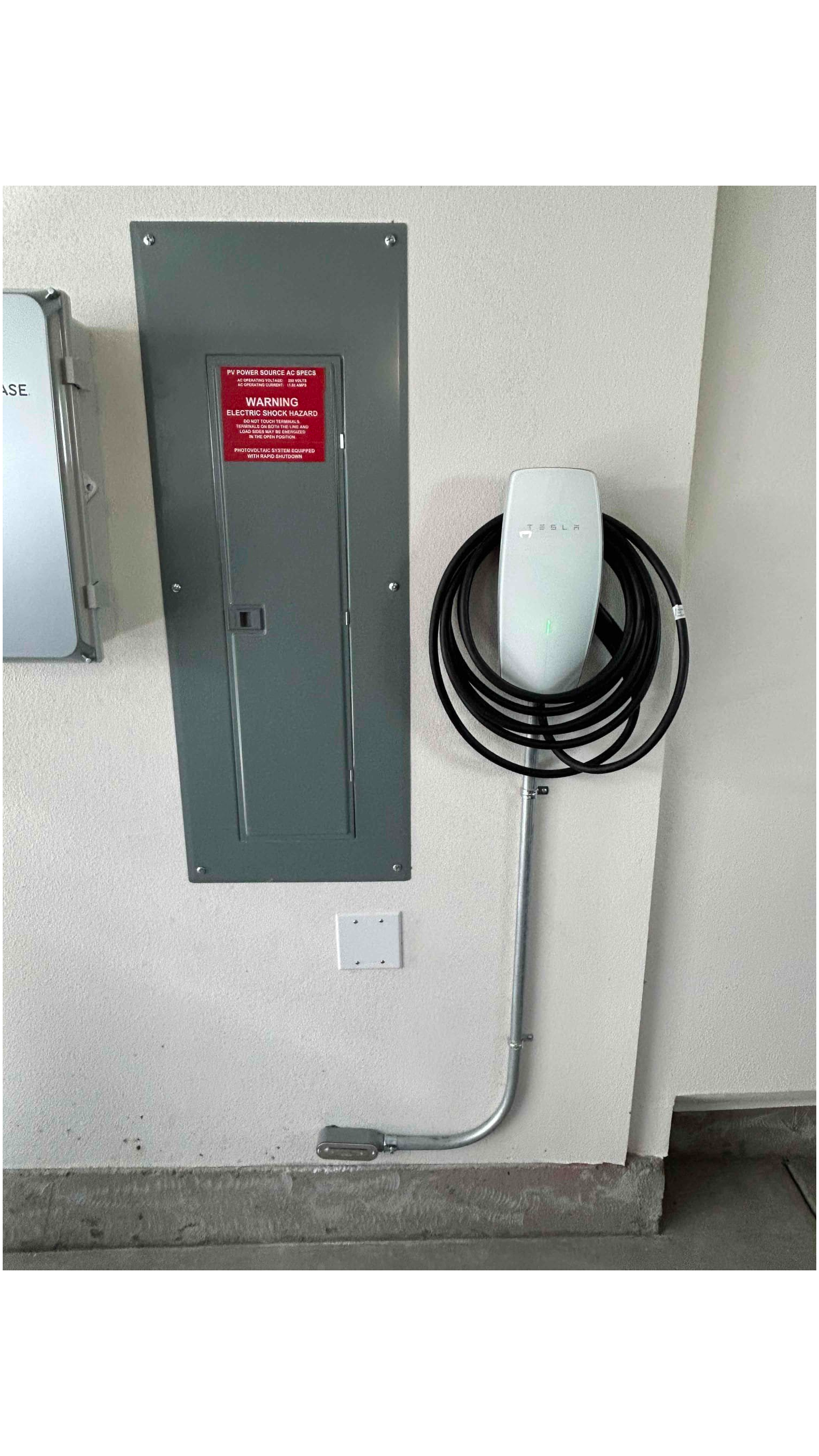
Key Takeaways
- Tesla home charger installation in San Diego typically costs between $1,200-$3,500, including equipment and professional installation, with panel upgrades adding $1,000-$4,000 to older homes.
- Level 2 charging delivers 14-44 miles of range per hour compared to Level 1’s 2-5 miles per hour, making overnight charging practical for daily Tesla drivers.
- Most Tesla Wall Connectors require a dedicated 60-amp breaker with 6-gauge copper wiring to handle the 48-amp continuous load safely.
- San Diego installations require electrical permits and professional inspections, with older homes often needing electrical panel capacity upgrades for code compliance.
Installing a Tesla home charger totally changes daily driving convenience, but the electrical requirements and costs vary significantly based on your home’s age and current electrical capacity. San Diego’s mix of older and newer homes creates unique installation challenges that require careful planning and expert electrical work.
Tesla Wall Connector Installation Costs $1,200-$3,500 in San Diego
Tesla home charger installations in San Diego range from $1,200 to $3,500 for complete professional setups, depending on equipment choice and electrical complexity. The Tesla Wall Connector itself costs approximately $465, while the Universal Wall Connector runs about $550 for homes needing compatibility with multiple EV brands.
Installation labor typically adds $750 to $1,500 to the total project cost. Simple installations near existing electrical panels cost less, while complex runs requiring extensive conduit work or challenging mounting locations increase labor expenses. Distance from the electrical panel to the charging location significantly impacts the final price, with longer wire runs requiring larger gauge conductors and additional materials.
Professional installation costs reflect the complexity of high-voltage electrical work, permit requirements, and safety inspections mandated by San Diego County. These expenses ensure long-term reliability and protect homeowners from potential electrical hazards that can result from improper DIY installations.
Level 2 vs Level 1: Which Tesla Charging Speed You Need
Understanding charging speeds helps Tesla owners choose the right home charging solution based on daily driving needs and electrical capacity. Level 1 and Level 2 charging offer dramatically different performance characteristics that impact convenience and installation requirements.
Level 1 Charging: 2-5 Miles Per Hour From Standard Outlets
Level 1 charging uses standard 120-volt household outlets, delivering approximately 2-5 miles of range per hour at 1.4 kW power output. This method works for Tesla owners with short daily commutes under 30 miles, allowing overnight charging to replenish typical daily usage without electrical modifications.
Mobile Connectors are available for purchase with NEMA 5-15 adapters for immediate Level 1 charging capability. While convenient for occasional use or emergency situations, Level 1 charging requires 24-48 hours to fully charge most Tesla models from empty, making it impractical for heavy daily driving or longer trips.
Level 2 Charging: 14-44 Miles Per Hour Depends on Circuit Amperage
Level 2 charging operates on 240-volt circuits, delivering 14-44 miles of range per hour depending on circuit amperage and Tesla model capabilities. Most installations provide 30-44 miles per hour, allowing complete overnight charging from near-empty batteries in 6-8 hours.
The charging speed varies based on circuit amperage: 30-amp circuits deliver about 22 miles per hour, 40-amp circuits provide 30 miles per hour, and 60-amp circuits maximize at 44 miles per hour for most Tesla models. Higher amperage installations require larger electrical panels and heavier gauge wiring but provide maximum convenience for daily charging needs.
Tesla Wall Connector vs Mobile Connector Performance
Tesla Wall Connectors offer superior charging performance compared to Mobile Connectors when paired with appropriate 240-volt circuits. Wall Connectors can deliver up to 48 amps of continuous power, while Mobile Connectors typically max out at 32 amps, depending on the outlet adapter used.
Wall Connectors feature weather-resistant housing for outdoor installations, integrated cable management, and Wi-Fi connectivity for remote monitoring. The permanent installation eliminates daily plug/unplug cycles that can wear outlet connections over time, providing better long-term reliability for daily charging routines.
Electrical Panel Requirements for Tesla Wall Connector
Tesla Wall Connector installations demand specific electrical infrastructure to operate safely and efficiently. Understanding these requirements helps homeowners assess their current electrical capacity and plan necessary upgrades before installation begins.
60-Amp Breaker and Dedicated Circuit Installation
Tesla Wall Connectors require dedicated 60-amp double-pole breakers to support their maximum 48-amp continuous output safely. The National Electrical Code mandates that continuous loads operate at no more than 80% of breaker capacity, making 60-amp breakers necessary for 48-amp charging loads.
Dedicated circuits prevent interference with other electrical devices and ensure consistent charging performance. Sharing circuits with other high-draw appliances like electric dryers or air conditioning units can cause breaker trips and reduced charging speeds, making dedicated installation necessary for reliable operation.
6-Gauge Copper Wiring for 48-Amp Continuous Load
Six-gauge copper THHN/THWN wire handles the 48-amp continuous load required for maximum Tesla Wall Connector performance. This heavy-gauge wiring safely carries high current loads without excessive voltage drop or heat buildup that could create fire hazards.
Wire gauge requirements increase for longer installation runs to compensate for voltage drop over distance. Installations exceeding 100 feet from the electrical panel may require 4-gauge or larger conductors to maintain proper voltage levels at the charging location, increasing material costs accordingly.
NEC Code Compliance and Safety Requirements
National Electrical Code Article 625 specifically governs electric vehicle supply equipment installations. Tesla Wall Connectors have built-in GFCI protection, and external GFCI breakers are not typically required and can sometimes cause operational issues.
Proper grounding ensures electrical safety by providing a safe path for fault currents. All metallic components including conduit, mounting hardware, and the charger housing must connect to the electrical system ground, creating multiple layers of protection against electrical hazards during normal operation and fault conditions.
When San Diego Homes Need Electrical Panel Upgrades
Many San Diego homes require electrical panel upgrades to accommodate Tesla charger installations safely. Assessing current electrical capacity prevents overloaded panels and ensures code-compliant installations that protect both the home and charging equipment.
Older Homes: Pre-1990s Electrical Capacity Issues
Homes built before 1990 typically feature 100-amp or 125-amp electrical services that struggle to support modern electrical loads plus EV charging demands. These older panels often lack sufficient breaker spaces or amperage capacity for adding dedicated 60-amp EV circuits without exceeding safe operating limits.
Pre-1980s homes frequently contain outdated breaker panels with known safety issues, including federal Pacific and Zinsco panels that pose fire risks. These panels require complete replacement regardless of capacity concerns, making panel upgrades mandatory rather than optional for safe Tesla charger installations.
Panel Upgrade Costs: $1,000-$4,000+ Additional Investment
Electrical panel upgrades typically cost $1,000-$4,000 additional for Tesla charger installations, depending on service amperage increases and installation complexity. Upgrading from 100-amp to 200-amp service involves utility coordination, meter replacement, and extensive electrical work that increases project timelines and costs.
Service upgrades require utility company involvement for meter disconnection and reconnection, adding 1-2 weeks to project schedules. Some upgrades need new service cables from utility transformers, creating additional costs that vary based on distance and local utility requirements.
San Diego Permit Requirements and Installation Process
Tesla charger installations in San Diego require electrical permits and inspections to ensure code compliance and safety. Understanding the permit process helps homeowners plan installation timelines and avoid delays during project completion.
Electrical Permit Application DS-320 Process
San Diego County requires DS-320 electrical permit applications for Tesla charger installations, including detailed load calculations and installation specifications. Simple installations in private garages may qualify for “No-Plan” permits using form DS-1779A, streamlining the approval process for straightforward projects.
Permit applications must include circuit specifications, breaker sizing, and charger mounting details. Load calculations demonstrate that existing electrical services can handle additional EV charging loads without exceeding safe capacity limits, preventing overloaded electrical systems.
Required Inspections for Code Compliance
Electrical inspections verify that Tesla charger installations meet National Electrical Code requirements and local safety standards. Inspectors check wiring methods, grounding systems, breaker sizing, and protection systems to ensure safe operation and code compliance.
Failed inspections require corrections before approval, potentially delaying project completion and increasing costs. Common inspection failures include improper grounding, incorrect wire sizing, missing protection systems, and inadequate weatherproofing for outdoor installations.
Professional Installation vs DIY Safety Considerations
Professional installation ensures safety, code compliance, and reliable operation while protecting homeowners from electrical hazards. Licensed electricians understand local codes, proper installation techniques, and safety requirements that prevent fires, electrocution, and equipment damage.
DIY installations violate most local electrical codes and void equipment warranties, creating potential insurance claims issues if electrical problems cause property damage. High-voltage electrical work requires specialized knowledge and tools that most homeowners lack, making professional installation the safest choice.
Tesla Charger Installation Cost Breakdown
Understanding specific cost components helps Tesla owners budget accurately for home charging installations. Equipment prices and installation complexities significantly impact the total investment required for convenient home charging.
Equipment Costs: Wall Connector $465, Universal $550
Tesla Wall Connectors retail for approximately $465 and provide dedicated charging for Tesla vehicles with NACS connectors. These units offer maximum charging speeds and integrate seamlessly with Tesla’s mobile app for monitoring and scheduling charging sessions.
Universal Wall Connectors cost around $550 but accommodate both NACS and J1772 connectors, supporting multiple EV brands in households with diverse vehicle fleets. The additional cost provides future flexibility as EV ownership expands or household vehicle preferences change.
Mobile Connectors offer portable charging solutions for about $300 but require appropriate 240-volt outlets for Level 2 charging speeds. These units work well for renters or homeowners wanting charging flexibility between multiple locations.
Installation Factors: Distance, Wiring, and Complexity
Installation costs vary significantly based on distance from electrical panels to charging locations. Runs under 50 feet typically cost less, while installations exceeding 100 feet require larger wire gauges and additional conduit materials that increase labor and material expenses.
Wiring complexity affects installation costs through conduit requirements, wall penetrations, and electrical obstacles. Simple garage installations near electrical panels cost less than complex outdoor installations requiring extensive conduit runs and weatherproof equipment.
Mounting location accessibility impacts labor costs through equipment requirements and installation difficulty. Ground-level installations cost less than elevated mounting positions requiring ladders or lift equipment for safe access during installation work.
Tesla Installations for San Diego’s Older Homes
San Diego’s diverse housing stock presents difficulties in terms of electrical work, from modern developments to historic homes. Your ideal electrician should ensure safe, code-compliant Tesla charger installations that protect both homes and investment in EV charging infrastructure.
The best approach includes electrical panel assessments, load calculations, permit handling, and post-installation support. Electricians should understand the specific complications that come with older San Diego homes, from outdated wiring to limited panel capacity and complex installation access points.
Look for companies that offer complete electrical services such as panel upgrades, rewiring, and safety improvements alongside Tesla charger installations. These capabilities will allow them to address any electrical issues discovered during installation planning, ensuring reliable charging performance and long-term electrical safety.
Point Loma Home Pros
4990 Viewridge Ave
SUITE 100
San Diego
CA
92123
United States