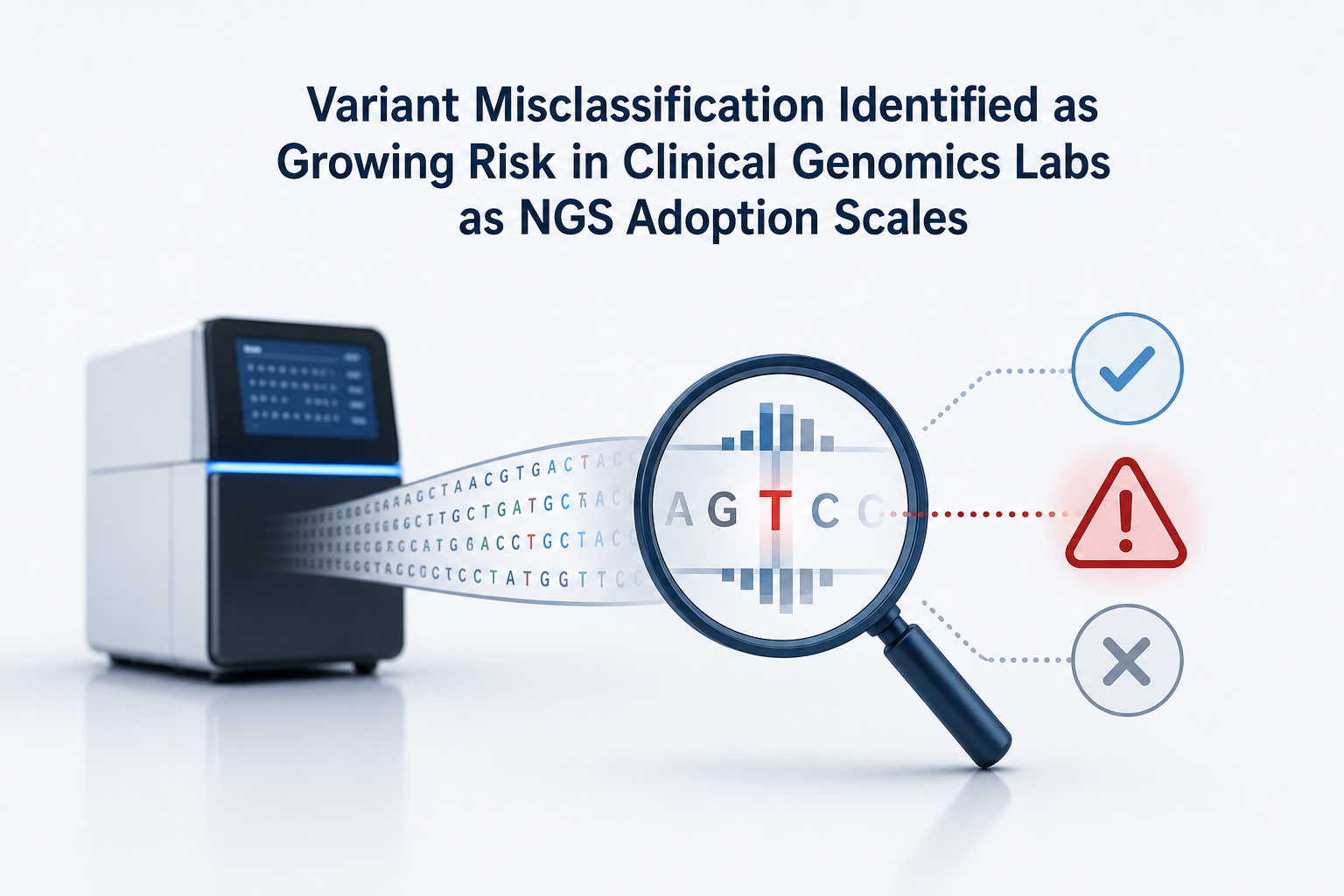
BOZEMAN, MT, UNITED STATES, May 26, 2026 /EINPresswire.com/ — As next generation sequencing becomes a standard tool in clinical medicine, a growing body of research is identifying variant misclassification as one of the most significant and underaddressed risks in genomic testing. Studies tracking reclassification rates across clinical laboratories have found that between 10 and 30 percent of variants are reclassified within three to five years of initial classification, with downstream consequences for patients, families, and the health systems responsible for their care.
The core issue is an infrastructure gap. Health systems have invested substantially in sequencing hardware, but many have underinvested in the interpretation layer that sits downstream of that hardware. Clinical genome analysis software capable of integrating curated variant databases, applying ACMG and AMP classification frameworks, and generating audit-ready reports is increasingly the differentiator between labs that can scale genomic testing safely and those that cannot.
Variant classification is not a lookup problem. It requires integrating population frequency data, functional evidence, inheritance patterns, and clinical case literature across thousands of variants per run. Labs relying on manual workflows, disconnected databases, or research-grade tools face compounding risk as their testing volumes grow. The consequences range from delayed diagnosis to unnecessary clinical intervention, and in some jurisdictions, a legal obligation to recontact patients when a variant is reclassified.
The challenge is particularly acute in two areas. First, targeted gene panel testing for hereditary cancer risk, cardiac disease, and other inherited conditions, where clinical panel analysis must meet strict regulatory standards and where false positives and false negatives have direct treatment implications. Second, whole genome sequencing, where the volume and complexity of data makes manual interpretation impractical at production scale.
Golden Helix, a clinical genomics software company with over 25 years of experience in the field, addresses this interpretation gap through its VarSeq platform. VarSeq provides structured ACMG and AMP classification workflows, monthly-updated curated annotation databases, automated evidence gathering, and clinical reporting built for CAP and CLIA compliance. The platform supports the full range of genomic analysis types, from targeted panels to whole genomes, within a single validated environment.
The genomics field has made extraordinary progress on sequencing. The next frontier is genome interpretation, bringing the same level of rigor, reproducibility, and clinical accountability to the interpretation step that sequencing itself now receives.
For more information on Golden Helix’s approach to clinical genomic interpretation, visit goldenhelix.com.
About Golden Helix
Golden Helix is a clinical genomics software company headquartered in Bozeman, Montana. Since 1998, Golden Helix has provided bioinformatics solutions to clinical laboratories, research institutions, and health systems worldwide. Its VarSeq platform supports the full clinical NGS workflow, from secondary analysis through variant interpretation and clinical reporting, and is used by leading genomics labs across North America, Europe, and beyond.
Contact Information
Golden Helix, Inc.
1487 North 14th Avenue
Bozeman, MT 59715
www.goldenhelix.com
Dr. Andreas Scherer
Golden Helix
email us here
Visit us on social media:
LinkedIn
Facebook
YouTube
X
Legal Disclaimer:
EIN Presswire provides this news content “as is” without warranty of any kind. We do not accept any responsibility or liability
for the accuracy, content, images, videos, licenses, completeness, legality, or reliability of the information contained in this
article. If you have any complaints or copyright issues related to this article, kindly contact the author above.

Media gallery